

TL;DR
Yes, cheap e-readers are worth it in 2026, but only for the right users. If you read occasionally, want a simple device, or are buying your first e-reader, budget models make sense. If you read daily, use PDFs or manga, or plan to keep the device for years, spending more is the smarter choice, especially when compared to the options in our budget-friendly e-readers guide.
How we research: manufacturer specs, owner reports from Reddit and MobileRead, and independent video reviews. We don't claim hands-on testing unless stated. Our method
What Is Considered a “Cheap” E-Reader in 2026?
A cheap e-reader today usually means a basic 6-inch model. At our tracked prices on October 15, 2026, the PocketBook Verse was $139.00, the basic Kindle was $149.99 (it has dipped to about $104 in the last 30 days), and the Kobo Clara BW was $159.99. Up to about $200 buys a step-up model such as the 7-inch Kindle Paperwhite, which was $199.99.
- Basic E Ink screens (often 6 inches)
- Front lighting (sometimes without warm light)
- Limited storage and features
- Closed ecosystems or restricted app support
Popular examples include entry-level models from Amazon, Kobo, and refurbished or older models from Android-based brands.
If you decide a cheap e-reader suits you, these three are the cheapest options we would consider:

Simple to use, with Send to Kindle and a large Amazon store.


IPX8 rating and built-in Libby integration, per Kobo.
The Biggest Advantages of Cheap E-Readers
1. Affordable Entry into E Ink Reading
Cheap e-readers are a low-risk way to experience E Ink. You still get excellent battery life and eye comfort without committing to a high price.
2. Distraction-Free Reading
Budget e-readers focus on reading only. Devices like the Kindle basic model avoid apps and notifications, making them ideal for distraction-free reading.
3. Great for Students and Casual Readers
For students and casual readers, screen comfort and battery life matter more than premium features. If you mainly read novels and occasional PDFs, budget models are often enough. Our comparison of the best e-readers for students in 2026 shows which ones make sense.
Where Cheap E-Readers Fall Short
1. Display Quality Still Matters
Some budget e-readers still use older panels, while newer ones bring better contrast at a low price. For example, Kobo lists the Clara BW with an E Ink Carta 1300 HD screen. The difference matters if you read a lot: older panels can mean less contrast, slightly slower refresh and more ghosting with PDFs or manga. Our roundup of budget-friendly e-readers compares which low-cost models offer the best contrast and lighting.
- Less contrast
- Slightly slower refresh
- More ghosting when reading PDFs or manga
If you read a lot, this becomes noticeable over time, our roundup of budget-friendly e-readers compares which low-cost models offer the best contrast and lighting.
2. Limited Lighting Options
Warm light is a comfort feature, not a luxury. Some basic models lack it, but others offer adjustable color temperature: the Kobo Clara BW and the PocketBook Verse both list it, according to their makers.
3. Slow Performance
Budget CPUs and limited RAM mean:
- Slower page turns
- Laggy menus
- Poor performance with large PDFs
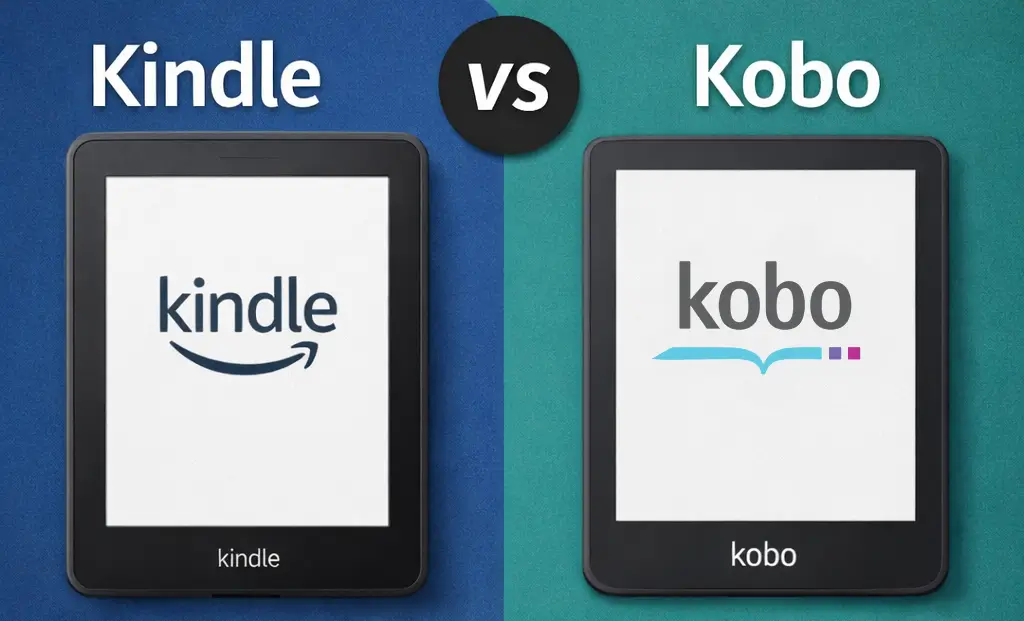
Cheap Kindle vs Cheap Kobo: Which Is Better?
| Feature | Kindle (Budget) | Kobo (Budget) |
|---|---|---|
| Ecosystem | Amazon-only | Open (EPUB support) |
| Library Support | Limited | Strong (OverDrive) |
| Customization | Low | Higher |
| Ads | Often included | No ads |
Subscription costs also matter over time. If you’re comparing ecosystems, it’s worth looking at current ebook and audiobook offers like the Kindle Unlimited deal or the Audible Premium Plus deal to see where long-term value really lies.
For readers outside the Amazon ecosystem, or those who use libraries, Kobo budget models often age better.
Are Cheap Android E-Readers Worth It?
Android e-readers trade simplicity for flexibility. Because they run Google Play, one device can hold the Kindle, Kobo and Libby apps plus manga and PDF tools. Current models aren’t stuck on old software either: Boox lists Android 15 on its Go 10.3 (Gen II), and Meebook’s Amazon listing shows Android 14 on the budget M8. The tradeoffs are real, though:
- Store apps aren’t built for E Ink. Owners on MobileRead describe adjusting the reading app and refresh settings before ghosting and page turns felt right.
- Software from smaller brands can be rough. Owners of the Meebook M8C report missed taps and machine-translated menus, as covered in our Meebook M8C review.
- They usually cost more. Most Android models cost more than a basic Kindle at $149.99 or a Kobo Clara BW at $159.99, and support depends on smaller brands, where buyers report slow contact.
If you mostly buy from one store and read novels, a basic Kindle or Kobo is simpler and cheaper. An Android e-reader is worth it if you need several stores, manga apps or PDF tools on one device and can accept rougher software. Our Meebook M8 review covers what a budget Android model gets you.
Who Should Buy a Cheap E-Reader in 2026?
- Are a first-time e-reader user
- Read novels only (no PDFs or manga)
- Want a backup or travel device
- Are on a strict budget
- Read PDFs, textbooks, or manga regularly
- Read daily for long sessions
- Want note-taking or stylus support
- Plan to keep the device for 4–5 years
Short Answer
Cheap e-readers are worth it in 2026 for light and casual readers who mainly read novels and want a simple, affordable device. They are not ideal for heavy readers, PDF or manga users, or anyone planning long-term daily use.
Ready to compare? See our picks in the best cheap e-readers under $200.
Sources (9)
- Amazon: Kindle (2024) listing, Removing ads from a Kindle, Meebook M8 listing
- Kobo: Kobo Clara BW product page
- BOOX: Go 10.3 (Gen II) shop page
- PocketBook: Verse user manual
- MobileRead owner threads: Kobo and PocketBook: my opinion, Small e-reader showdown, Boox Tab Ultra C impressions